
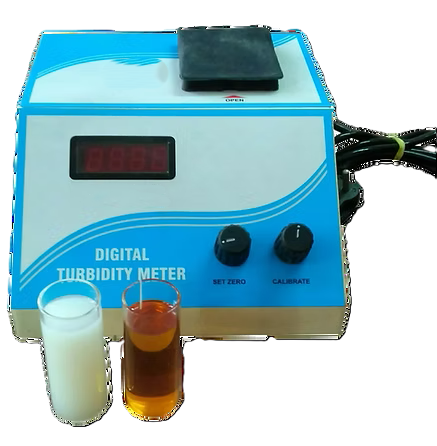
Description
A Turbidity Meter is a precision analytical instrument designed to measure the cloudiness or haziness of a fluid, caused by suspended solid particles. It works by projecting a beam of light through a water sample and detecting the amount of light that is scattered by the suspended particles at specific angles. The intensity of this scattered light is then quantified into Nephelometric Turbidity Units (NTU), providing an accurate, numerical value that indicates the clarity of the liquid.
This measurement is critical in assessing water quality for a wide range of applications, including environmental monitoring of lakes and rivers, wastewater treatment processes, and ensuring the safety of drinking water. High turbidity can indicate pollution, the presence of microorganisms, or ineffective filtration. Modern turbidity meters are built for both laboratory and field use, featuring advanced optical systems for high accuracy, user-friendly digital interfaces, and durable, waterproof designs. By delivering reliable and immediate results, the turbidity meter is an indispensable tool for maintaining public health, protecting aquatic ecosystems, and ensuring compliance with water quality standards.

Reviews
There are no reviews yet.